
Sustainability Education for Students
HKUST is committed to fostering sustainability education and equipping our students with the knowledge and skills necessary to address global challenges including the United Nations' Sustainable Development Goals (SDGs). Through our Common Core Program, extended major in Sustainability, SDG-integrated curriculum and various initiatives, we strive to create a sustainable campus and promote responsible consumption.
SDG Education Integrated into Curriculum
Common Core Program
As part of our commitment to sustainability and SDGs education, all undergraduate students at HKUST are required to complete a Common Core Curriculum that includes Sustainability Fundamentals since 2025. This program integrated across the full curriculum exposes students to the principles and concepts of sustainability, enabling them to develop a solid understanding of sustainable practices and problem-solving. Intended learning outcomes are to demonstrate understanding of sustainable development, resource conservation and economic-socio-environmental approaches and perspectives. 20 courses are related to Sustainability and SDGs for the 2025-26 course offering and for the 2026-27 course offering.
Extended Major in Sustainability
Extended Major in Sustainability is an add-on element to enrich the existing majors. The extended major in SUST requires at least 24 credits, including core courses, and sustainability-focused electives offered by various departments. The Extended Major in Sustainability is available for combination with Science Major, Engineering Majors, Business Majors, all majors offered by School of Humanities and Social Science and Academy of Interdisciplinary Studies (except BSc in Individualized Interdisciplinary Majors).
55 courses are available in 2025 covering wide range of SDG topics. Required courses cover sustainability fundamentals, life cycle thinking, and environmental management, fostering a cross-disciplinary mindset. Elective courses, such as ESG Investing, Energy Storage Technology and Energy Policy, green buildings, circular economy, climate change, energy policy, sustainable ocean and coastal marine habitats allow students to tailor their studies to their major and career goals.
Program
Master of Science in Environmental Science, Management and Sustainability (EVSM)
EVSM is a multi-disciplinary program that emphasizes application of environmental science & sustainability knowledge and environmental management skills to solve local, regional and global issues. While core courses in all environmental science, environmental management and sustainability areas are required for this program, there are also variety of elective courses to cater to students of a diverse background. The minimum credit requirement is 30 credits, including 18 credits of foundation courses and 12 credits of elective courses. This includes environmental policy, environmental impact assessment, circular economy, energy systems, climate change.
Bachelor of Science in Environmental Management and Technology (EVMT)
The program features specially designed courses that cover a wide range of subjects, including environmental technology for impact assessment, environmental law, environmental, social, and governance (ESG) management and reporting, green business strategy, energy sources and usage, sustainable development, and life cycle assessment. In the final year of study, students have the opportunity to put theory into practice through the Capstone Project, where they work on real-world problems with companies and NGOs. The program also emphasizes practical experience through internships and exchanges. More information about the 2025-26 courses can be found here.
BSc in Sustainable and Green Finance (SGFN)
The SGFN curriculum overlays business and finance topics with sustainability significance. This covers four major components in the SGFN curriculum: Business and Finance Required Courses and Electives; Environment and Sustainability Required Courses and Electives; Foundation Courses and University Common Core Courses. More information about the 2025-26 courses are available here.
BSc in Ocean Science and Technology (OST)
This integrative program offers students with a comprehensive foundational understanding of the cross-disciplinary ocean science and technology, and provides exposure to the cutting-edge scientific and technological development related to investigating, conserving and managing ocean resources.
Courses Mapped to SDGs
The SDG reports 2024-25 highlights the key courses for each SDG.
Sustainability Education Advisory Group (SEAG) & Sustainability Course Evaluation
The SEAG is a dedicated group at HKUST that works towards the university's strategic vision of becoming a regional leader in sustainability education. SEAG conducts regular analysis to identify opportunities and gaps in sustainability education, ensuring that our students graduate with the capacity and commitment to solve problems locally and globally.
We offer a wide range of sustainability-focused and sustainability-related courses to provide comprehensive education in sustainability. These courses are designed to cover sustainability concepts, issues, and contemporary thinking. Currently, we offer 61 sustainability-focused courses and 36 sustainability-related courses.
The annual Sustainability Course Evaluation Report assesses the exposure of our graduates to sustainability concepts. The data for the 2023-24 academic year shows that:
- 94% of graduates took at least one sustainability course during their undergraduate studies, with 66% completing two or more. 8% of all graduates completed at least 1 course that is related to Sustainability. Only 6% of students graduated with no course exposure to sustainability, which remains consistent with the last years.
-
Sustainability Focused or Related courses represented roughly 11% of the approved new courses.
-
By distribution, all schools and most departments included at least one listed course.
-
A total of 91 newly offered courses were reviewed and an addition of ten new courses were added to the Sustainability course inventory, representing 11% of the newly offered course in the academic year of 2023/24.
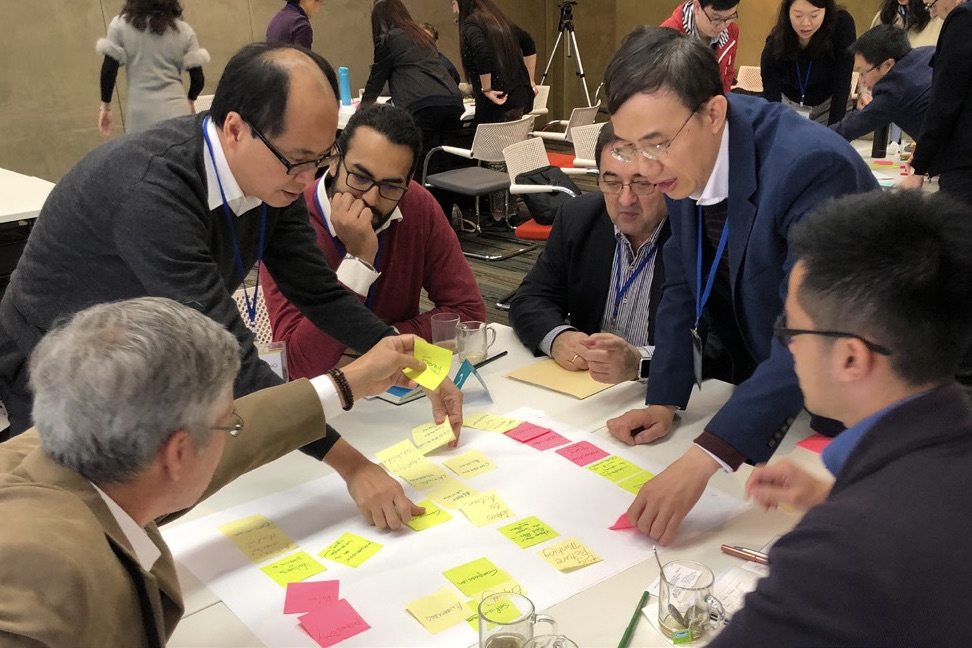
Sustainable Education Advisory Group
Sustainable Innovators Program / Sustainable Design Thinking Program
Initiated since 2022, the HKUST Sustainable Innovators Program / Sustainable Design Thinking Program held annually is a collaborative initiative between HKUST's Clear Water Bay and Guangzhou campuses. This workshop focuses on sustainably solving problems using design thinking methodologies. It provides students with the opportunity to work together, visit sustainable projects, and learn from practitioners and researchers.
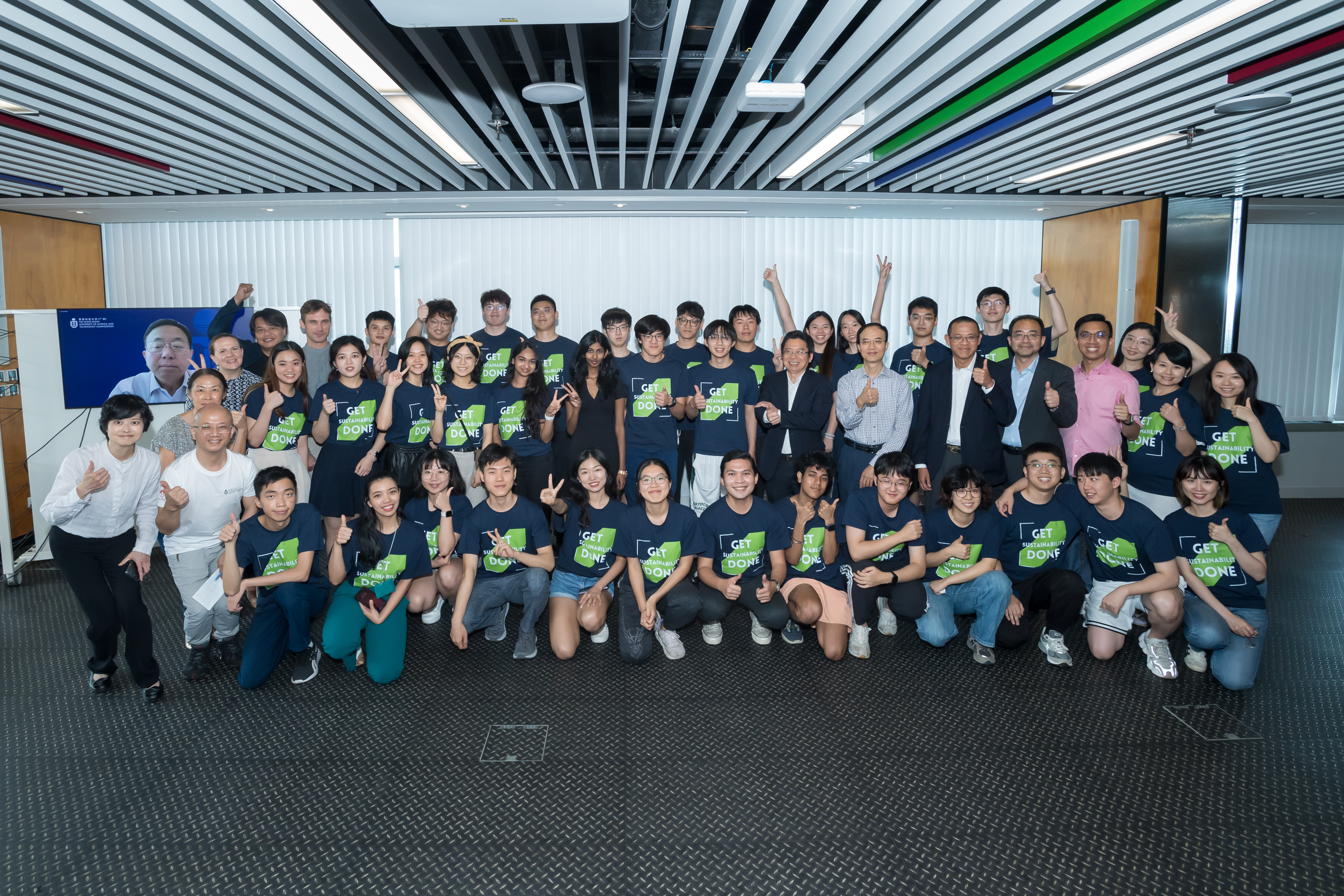
Sustainable Innovators Program / Sustainable Design Thinking Program
Jockey Club Sustainable Campus Consumer Programme
The Jockey Club Sustainable Campus Consumer Programme aims to promote responsible choices, consumption, and consumer activism among students.
The programme also implements a range of campus improvement and education initiatives to achieve its goals, including #EatForThePlanet programme which collaborates with on-campus catering outlets to implement carbon-labeled menus, raising awareness about the carbon footprint of food choices and promoting sustainable eating habits.
The JCSCCP Sustainability Leadership Programme provides leadership training to a select group of students from each university campus. These students develop and execute student-led projects dedicated to fostering sustainability and responsible consumption within their own campus communities. The programme offers guidance and support, connecting students with like-minded individuals from other universities and professionals working in the field of sustainability.
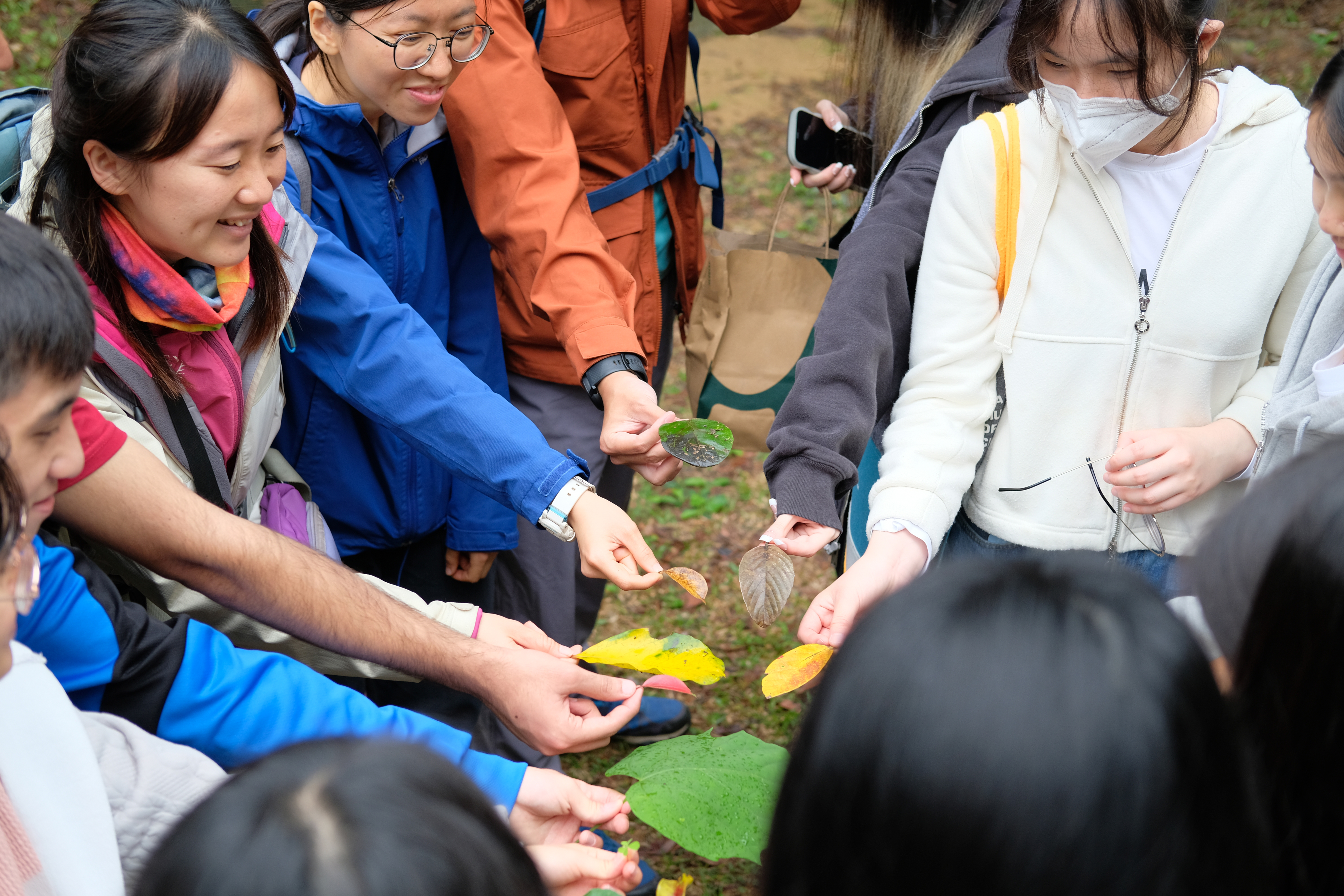
JCSCCP Sustainability Leadership Programme
Green Team
The Green Team has the power to drive sustainable change on campus by actively contribute to creating a more sustainable campus environment and making a positive impact. Members can work on hands-on projects that improve our campus and community and initiate sustainability projects, such as vegan tasting, meal boxes go green, and food sharing. By joining the Green Team, students can actively contribute to sustainability, gain valuable skills in project management and leadership, and become part of a collaborative community with like-minded peers.
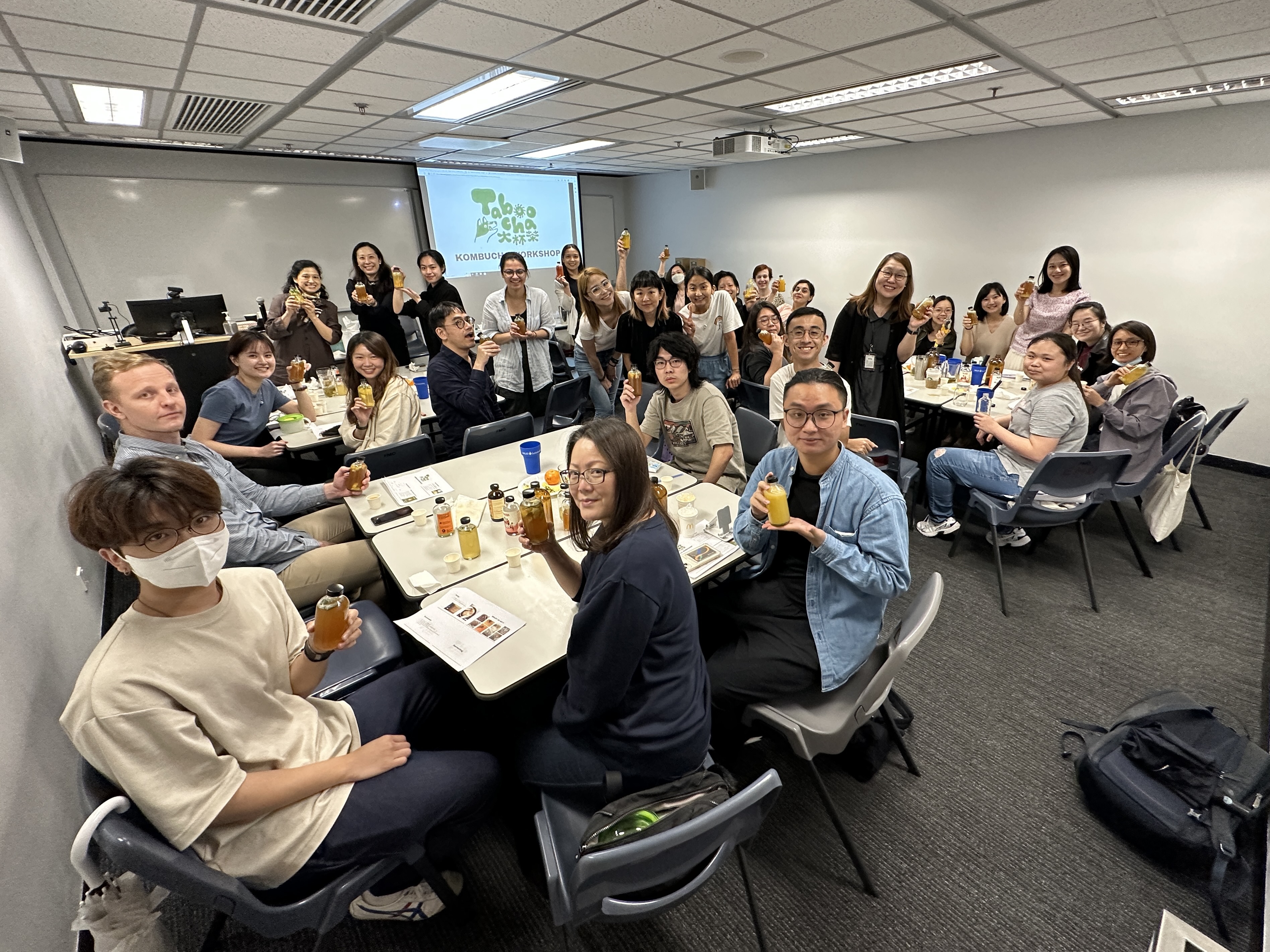
Green Team Kombucha Workshop
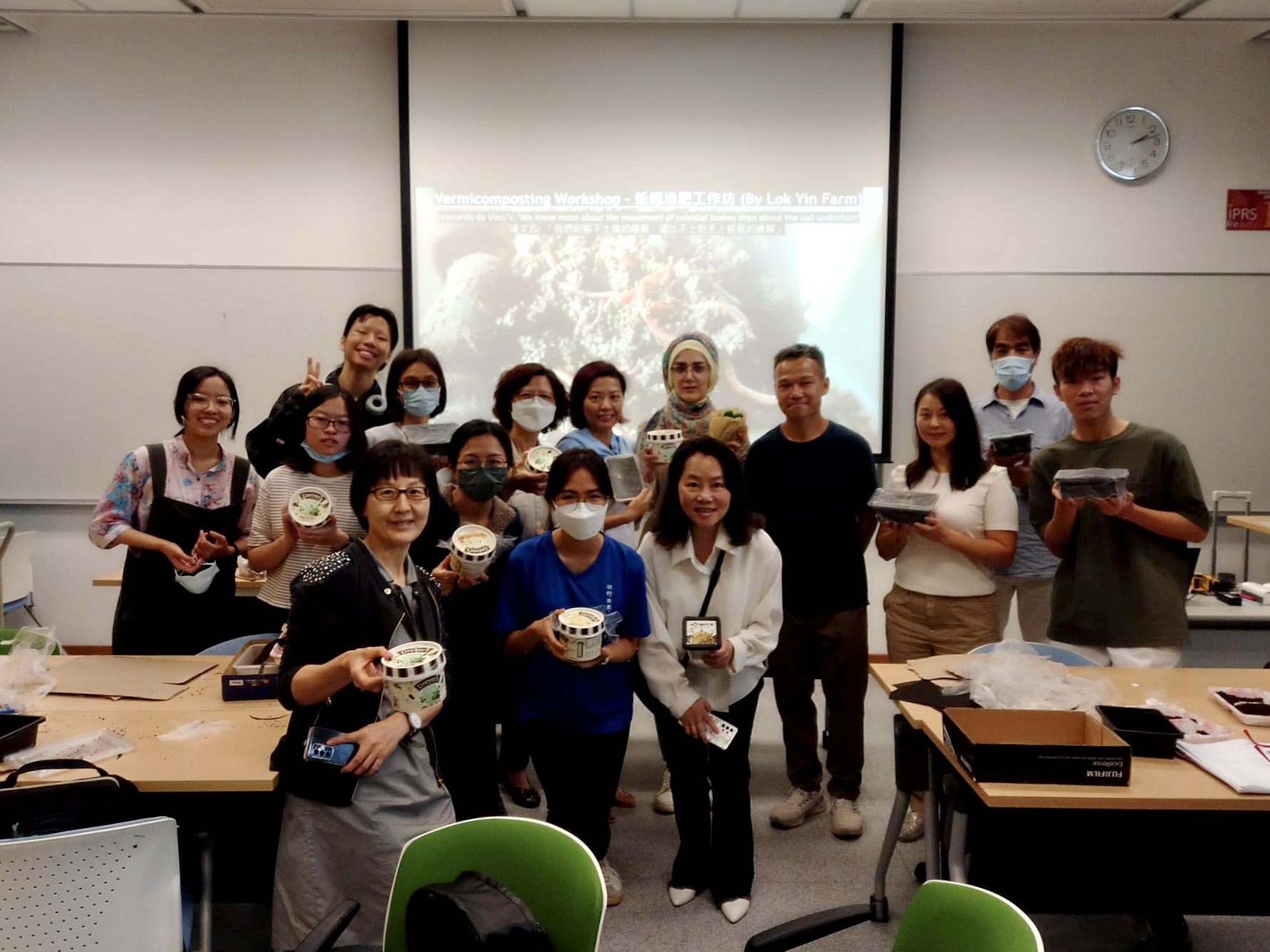
Green Team Vermicomposting Workshop
Sustainability Literacy Survey
At HKUST, we are committed to fostering a deep understanding of sustainability for all students from wide ranging schools and disciplines. Sustainability Literacy Survey is utilized as an educational tool to help all students enhance their awareness and reflect on their understanding of key sustainability concepts and current government policies.
HKUST employs a recognised methodology to assess the interconnectedness of social, economic and environmental issues, covering UN SDGs, climate change basics, climate resilience, ESG issues, system thinking, global poverty and social equity. This aligns with Hong Kong's strategic climate directives. Tailored questions designed as per AASHE guidelines assess our community. Explanations and references to videos and materials are provided to reinforce the learning. This survey is shared with all staff and students.
The outcomes allow us to track our progress and further improve sustainability education and operations.
From 2025 onwards, we have broadened the measurement pool to include all staff (academic and non-academic), as well as post-graduate and PhD students. By evaluating the ability to learn and retain key concepts of sustainability, we gain valuable insights into the effectiveness of our educational and operational sustainability initiatives.
Please find the findings from the 2021-2023 Sustainability Literacy Survey here, the 2025 survey here and 2026 survey here.
More details about the Sustainability Literacy Survey can be found through the link.