Sustainability Literacy Survey
At HKUST, we are committed to fostering a deep understanding of sustainability for all students and staff. Sustainability literacy is essential for preparing individuals to address sustainability challenges and contribute to Hong Kong’s goal to achieve carbon neutrality by 2050. To track our progress and further strengthen sustainability education and operations, since 2021, we have been conducting Sustainability Literacy Survey for measuring sustainability literacy across our community. By regularly evaluating the ability to learn and retain key concepts of sustainability, we gain valuable insights into the effectiveness of our educational and operational sustainability initiatives.
Methodology
The Sustainability Literacy Quiz is a 19-question survey developed to assess HKUST students' and staff members' ability to learn and retain key concepts of sustainability. As of 2025, the measurement pool has been broadened to include all staff members, both academic and non-academic, as well as postgraduate students.
HKUST employs recognized methodology to assess understanding of the interconnectedness of social, economic and environmental knowledge and challenges, rather than opinions and sustainability culture. We have identified material sustainability topics to include UN SDGs, climate change basics, ESG issues, systems thinking, global poverty and social equity. This aligns with Hong Kong’s strategic climate directives like Hong Kong’s Climate Action Plan 2050, Climate Action Plan 2030+, and Hong Kong Smart City Blueprint 2.0.
With reference to the guidelines from Association for the Advancement of Sustainability in Higher Education (AASHE), tailored questions are designed by HKUST faculty and Sustainability / Net-Zero Office to assess the community's understanding of these issues. Our assessments comprised of right / wrong multiple-choice questions, with explanation and references for “correct”, “incorrect” and “I don’t know” responses after each attempt. This survey is made publicly accessible.
Sustainability Literacy Survey Results
2026 Findings
In 2026, 627 of the community participated in the survey.
Key findings:
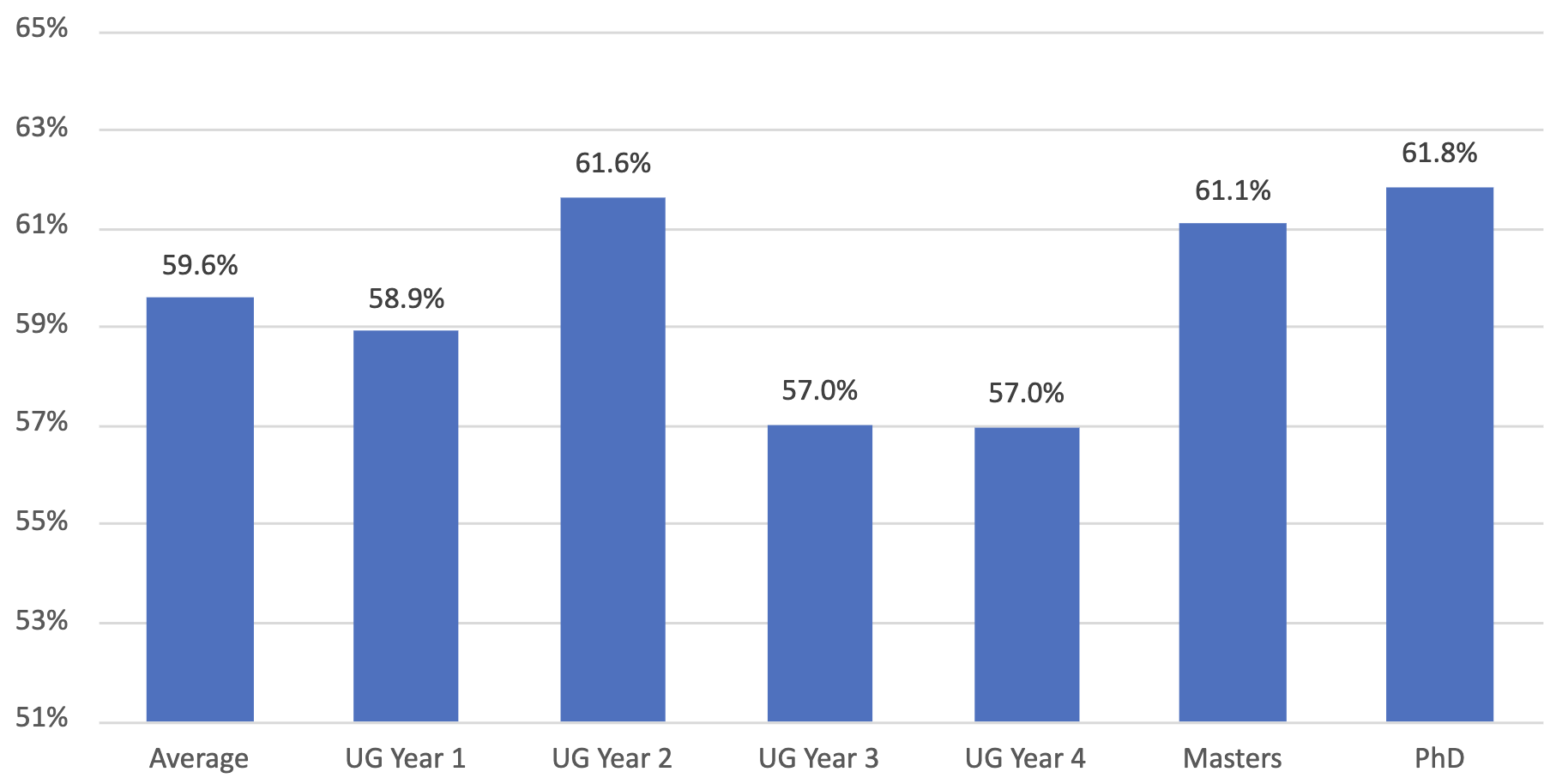
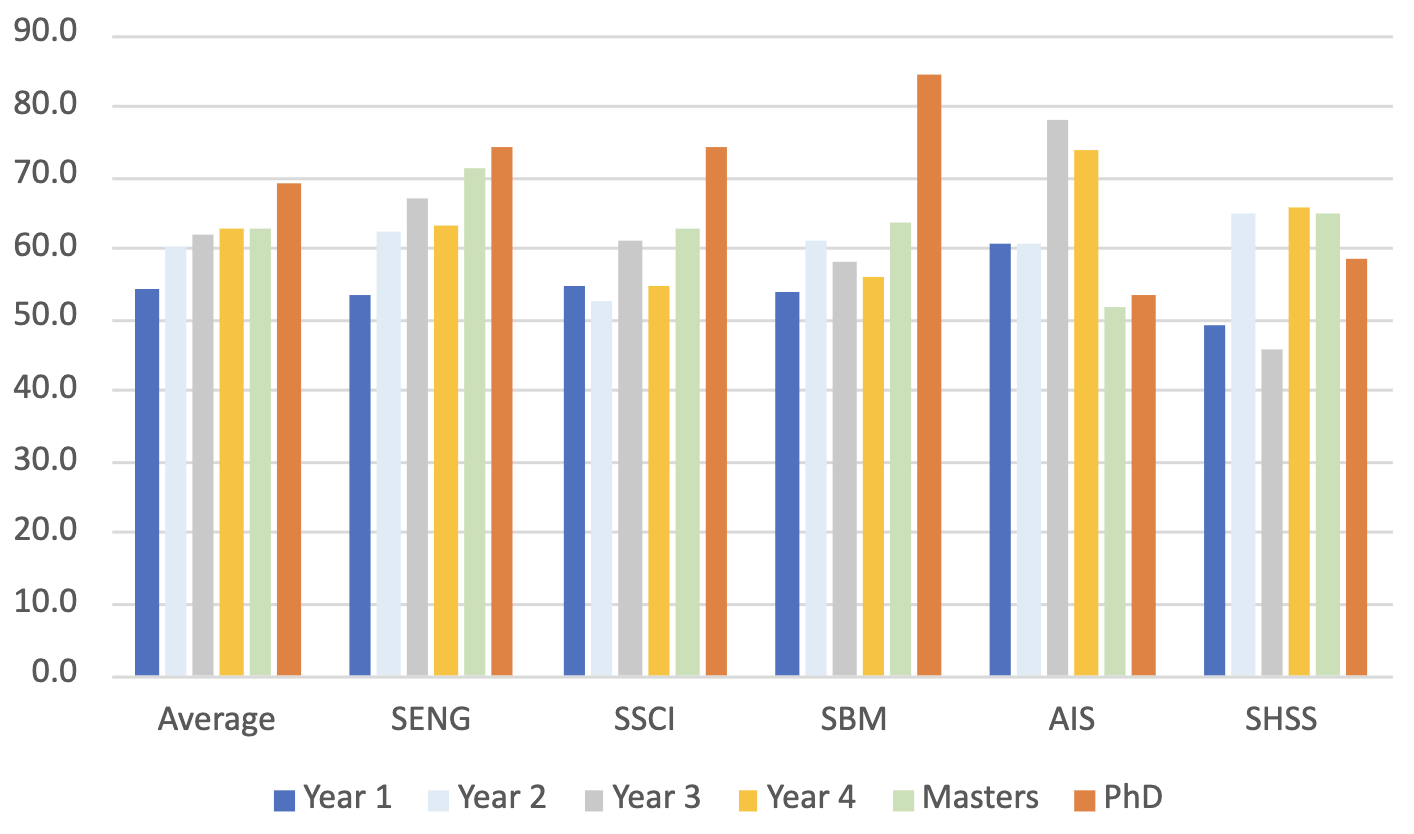
- Sustainability literacy shows a positive correlation with years of study, as average scores generally increase from UG Year 1 to PhD students, indicating that higher education deepens sustainability literacy.
- Students and staff demonstrate different areas of strength and weakness: students perform strongest in social concepts, while staff demonstrate stronger knowledge in environmental concepts. However, both groups show gaps in understanding local government and international sustainability goals.
- Between 2025 and 2026, there has been a gradual decline in literacy scores across cohorts, pointing to the need for reinforced and continuous sustainability education.
Recommendations:
- There is a need to continue and strengthen existing self-learning modules, seminars, orientation content, and curricular integration to strengthen sustainability literacy in particular relating to local government and international sustainability goals such as SDG concepts.
The analysis of the results, along with a discussion of conclusion and future recommendations, can be reviewed in the 2026 Sustainability Literacy Report here.
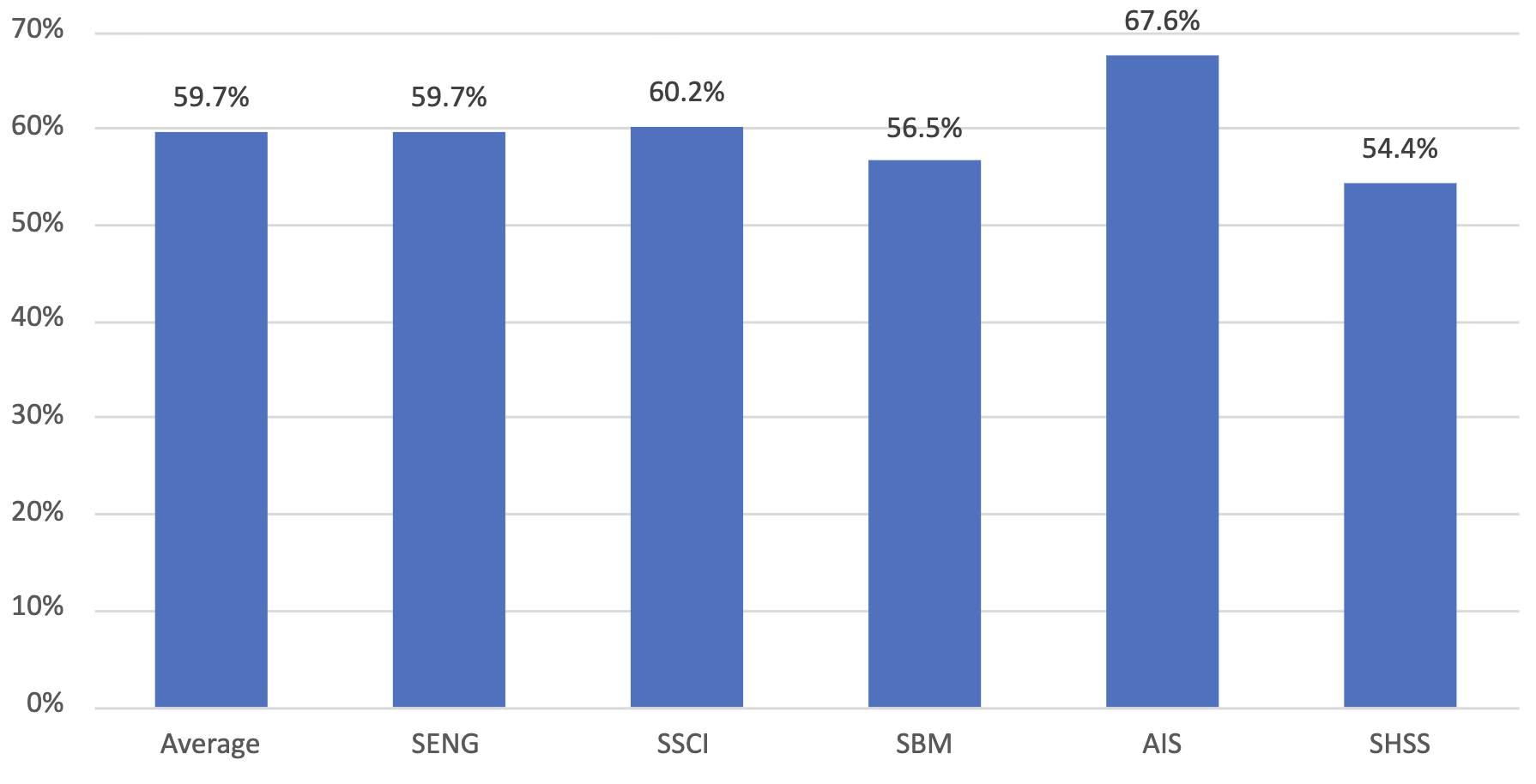
Results by School in 2026
Results by Year Group in 2026
Results by School & Year Group in 2026
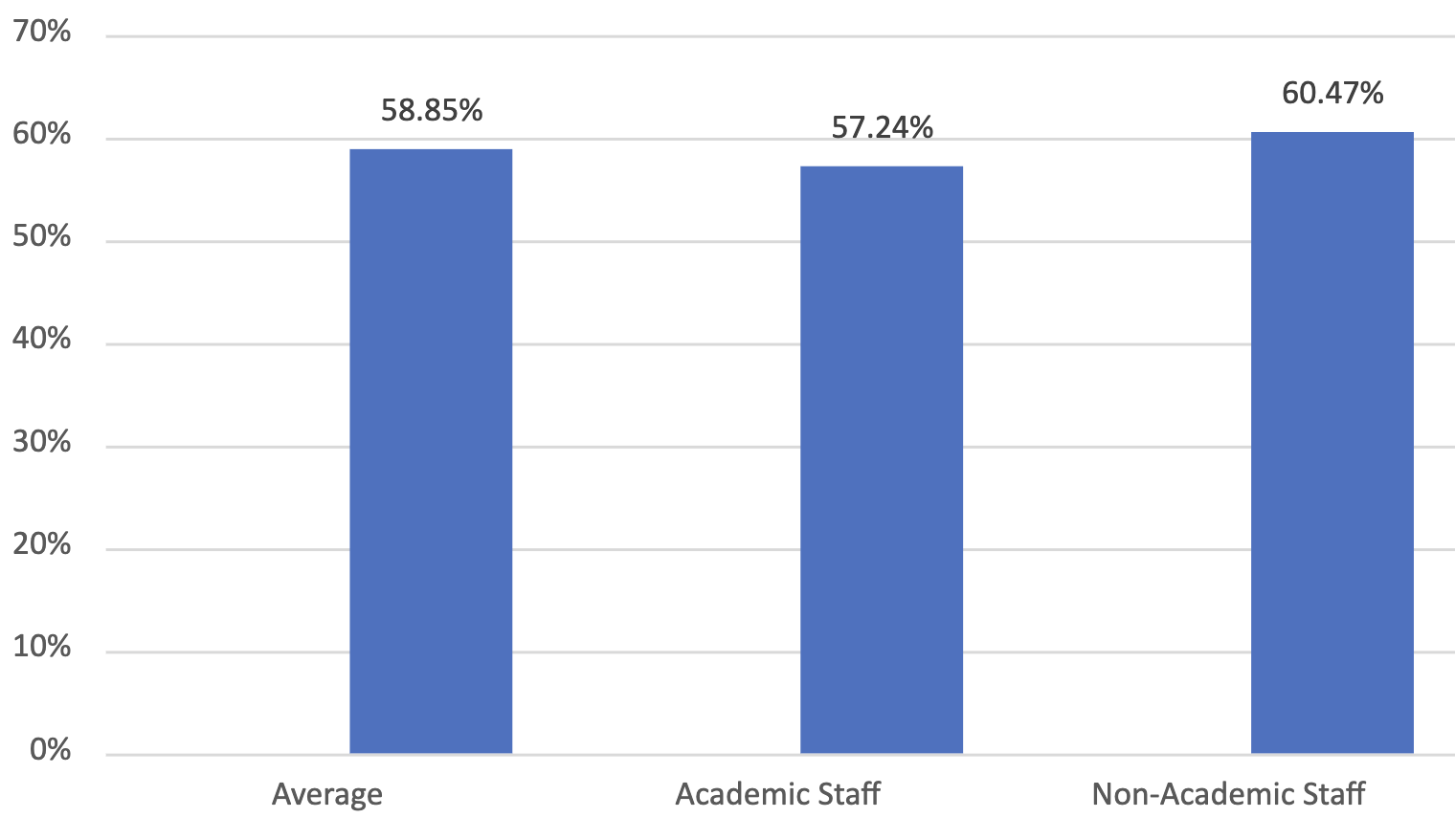
Results by Staff Classification in 2026
2025 Findings
In 2025, expanding on the previous 2021-23 Sustainability Literacy Quiz survey that exclusively targeted HKUST UG students, we have broadened the measurement pool to include all staff (academic and non-academic), as well as post-graduate and PhD students. New questions were also added to cover climate change.
Key findings:
- Overall average score has increased steadily from 2022 to 2025. A general improvement is observed in performance across all schools, with SSCI, SHSS, and SBM recording strong growth over the years.
- Students and staff perform poorer in relation to knowledge about local government and international sustainability goals.
Recommendations:
- Online self-learning modules, sustainability seminars, workshops and orientation programs were recommended to strengthen the sustainability literacy among the community.
The findings from the 2025 Sustainability Literacy Report can be reviewed here.
Results by School in 2025

Results by Year Group in 2025

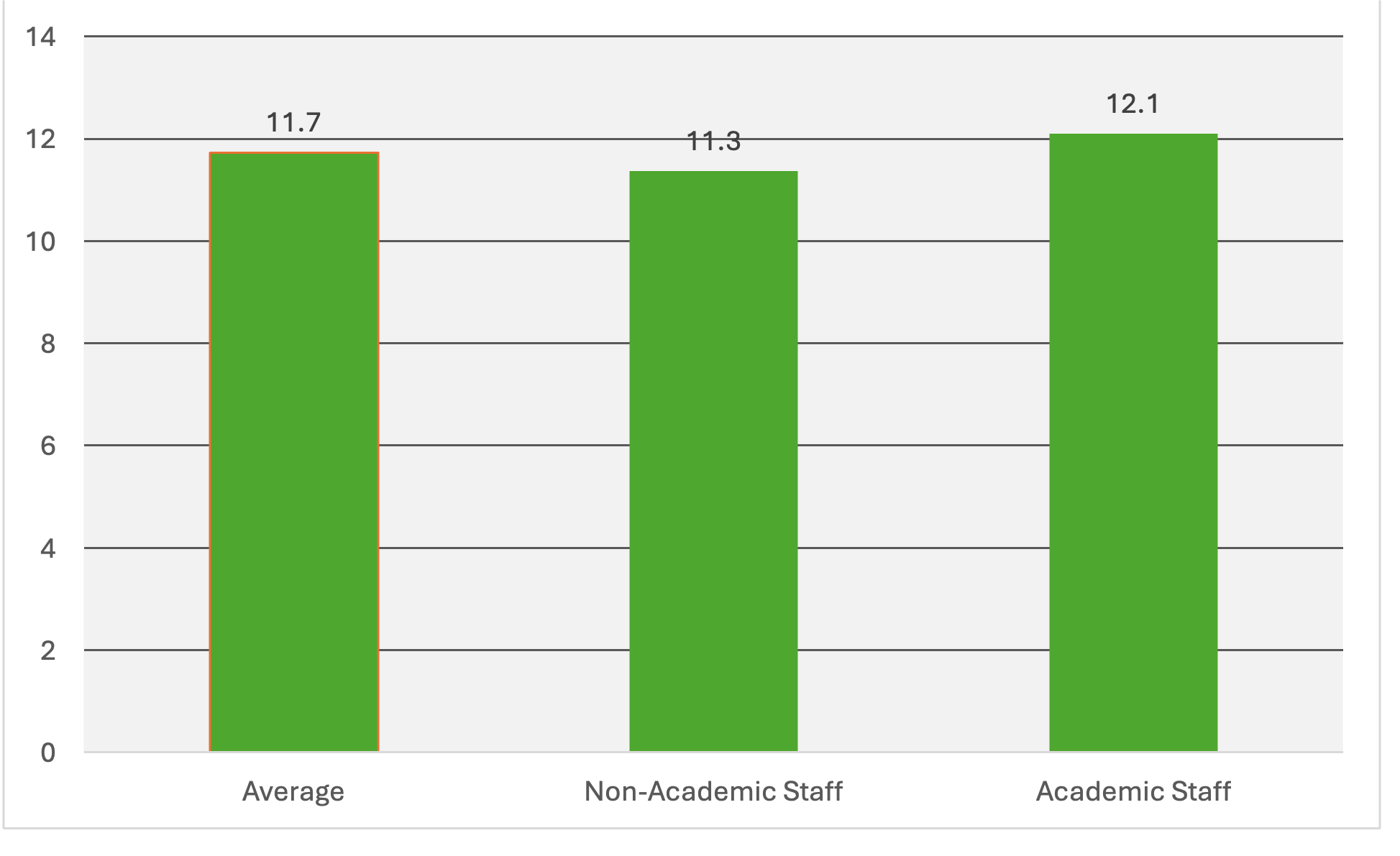
Result by Staff Classification in 2025
2021 to 2023 Findings
From 2021 to 2023, HKUST conducted a Sustainability Literacy Quiz survey, engaging our students to measure their sustainability knowledge. Students who participated included students from each student cohort and school. This voluntary survey, covered a wide range of sustainability areas, such as UN Sustainability Development Goals, HK 2030 Decarbonization Strategy and Futures-thinking concept. Results indicated that Year 4 students demonstrated a better understanding of sustainability, scoring higher on average than other year groups. Students from Academy of Interdisciplinary Studies consistently register higher scores, particularly for 3rd and 4th year students. The findings from the 2021-2023 Sustainability Literacy Report can be reviewed here.
Results by Year Group in 2023
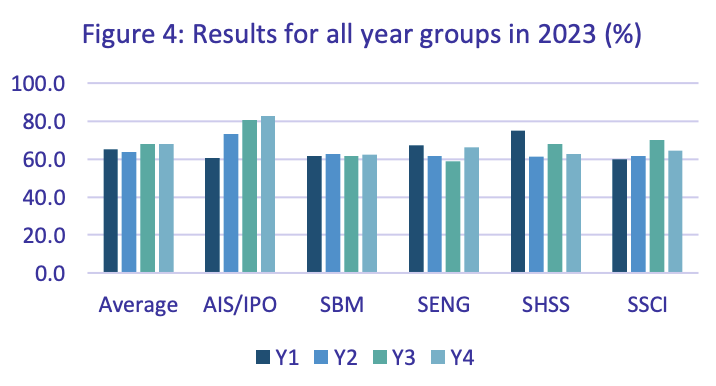
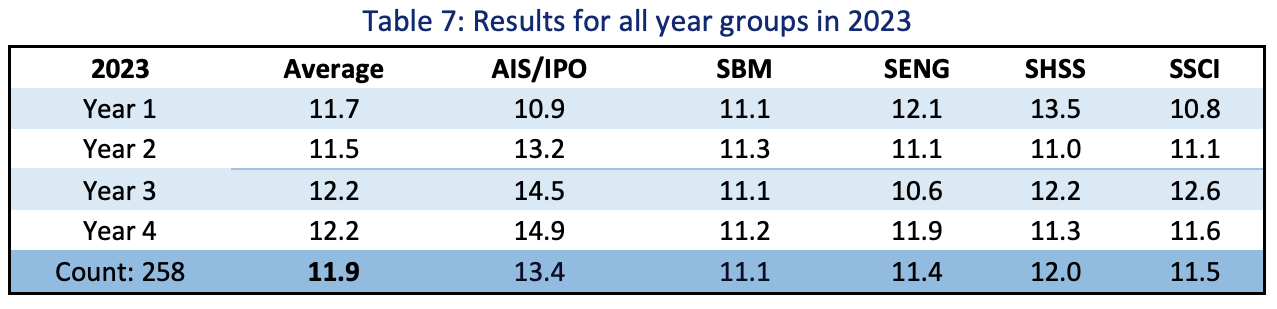
Students in Academy of Interdisciplinary Studies, especially in their 3rd and 4th year students consistently register higher scores.
Student Sustainability Education and Staff Training at HKUST
For students, sustainability education is provided through the Common Core Program, Sustainability Education Advisory Group (SEAG), Design Thinking Workshop, Jockey Club Sustainable Campus Consumer Programme, and Green Team. For more information on sustainability education for student, please visit our website.
For staff, sustainability training is provided for staff through online modules on Life Cycle Thinking, sustainability seminars, sustainable volunteering opportunities, hands-on workshops, and engagement initiatives to foster sustainable operations. For more information on sustainability training for staff, please visit our website.