Empowering Campus Innovation: HKUST Living Lab Program Awards $3.9 Million to Seven Projects Following Dynamic Pitch Day
The Hong Kong University of Science and Technology (HKUST) has selected seven cutting-edge projects for the latest round of the Sustainable Smart Campus as a Living Lab program. Covering a diverse array of sustainability challenges, these projects address marine biodiversity, indoor air quality, campus climate resilience, EV grid synergy, and energy-efficient building cooling. By turning the Clear Water Bay campus into a vibrant testbed for practical innovations, the program provides students and faculty with invaluable hands-on experience before scaling these solutions for real-world implementation.
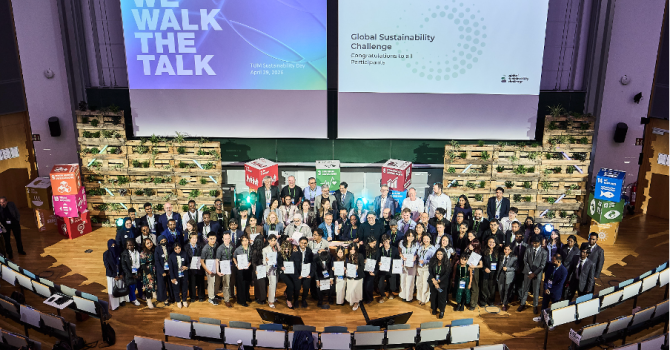
The selection followed a highly anticipated Living Labs Pitch Day held in March. Shortlisted teams—comprising visionary faculty, students, and green tech startups—presented their proposals to a diverse evaluation panel of campus operations staff, sustainability experts, and industry representatives. Through this rigorous process, seven standout projects were awarded a total funding allocation of HK$3.9 million. These teams will begin transforming various areas of the campus later this year, accelerating HKUST’s progress toward its 2028 Sustainability Challenge and Net-Zero Action Plan 2045.
This year’s selection process placed a heavy emphasis on practical, real-world utility. “By gathering challenge statements from our campus operations and industry partners for the first time, we saw incredible synergy across our community,” said Prof. TAM Kar-Yan, HKUST Vice-President for Administration and Business. “Our campus serves as an active lab for over 20,000 scientists and innovators to turn visionary concepts into successes.”
Highlighting the program's competitive yet collaborative nature, Prof. Hong LO, Dean of Engineering and academic lead of the Living Lab, noted: “Receiving 28 submissions for our ninth call for proposals demonstrates immense interest. Selecting just seven projects makes it highly competitive, but the Living Lab remains an extraordinarily rewarding space where we can share ideas and solve challenges together.”
Dr. Kenneth LEUNG, Director of Sustainability/Net-Zero and administrative lead of the Living Lab, added: “Partnering directly with industry to define core challenge statements allows us to look beyond internal needs. We are directly tackling urgent, real-world sustainability issues.”
The 2026 Living Labs Awarded Projects Include:
-
Saving Energy via Hydrogel-Based Air Drying (Waste-Heat Dehumidifier): Led by Prof. Yanguang ZHOU, this project develops a novel rotary dehumidifier powered by low-grade waste heat from campus HVAC systems, significantly cutting the energy consumed by conventional cooling and reheating.
-
Safer Cleaning with Nanobubble Drones: Project leaders Prof. Samir Kumar KHANAL and Mr. Li Dickson are integrating advanced nanobubble technology with drones to safely clean glass facades and solar panels—drastically reducing water use, chemical detergents, and labor risks.
-
Clean Air via Visible-Light Activated Nanotech (VOC-Eating Wall Coating): Led by Prof. Jinglei YANG, this project deploys a light-activated air purification spray and filter system that autonomously degrades indoor pollutants, improving air quality.
-
Balancing Room Comfort via Real-Time Crowd Voting (JustRight AI Cooling): Mr. Lester CHAN and Prof. Walter Zhe WANG are introducing a human-in-the-loop AI system. Using a mobile app, occupants can submit real-time comfort votes to dynamically adjust hybrid cooling (ceiling fans and AC) for optimal energy savings.
-
Protecting the Community with Hyper-Local Heat Warnings: Led by Prof. Zhi Ning and Dr. Stanley YIP, this AI-driven orchestration system translates regional weather data into site-specific alerts to protect outdoor workers and students from extreme heat on campus.
-
Smarter EV-Charging for Grid Synergy: Prof. Zhe WANG and Prof. Hong LO are utilizing a dynamic scheduling algorithm and a user-facing app to shift electric vehicle charging to off-peak hours, mitigating power grid stress and delaying the need for expensive infrastructure upgrades.
-
Coral Restoration via AI-Powered Underwater: Led by Prof. Sai-Kit YEUNG, this project transforms the HKUST pier into an active marine lab, featuring an underwater camera array, AI-assisted species detection, and coral gardening to restore local marine biodiversity.